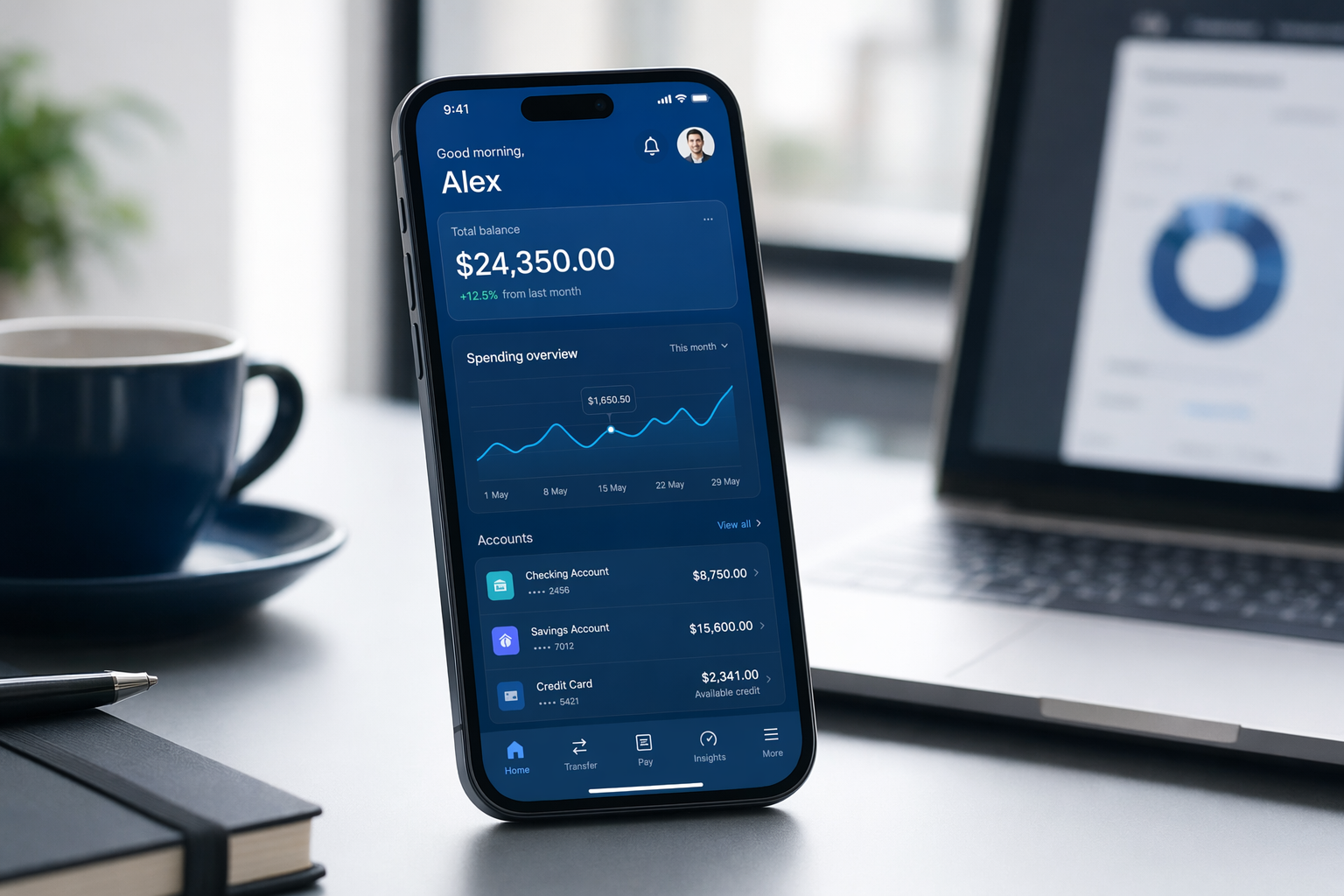
The way Americans manage their money has changed dramatically. A decade ago, choosing a bank meant driving to a local branch, sitting across from an account officer, and accepting whatever interest rate was printed on a brochure. Today, millions of consumers are moving their deposits to online-only banks that offer higher yields, lower fees, and sophisticated mobile tools that make the old branch experience feel like a relic.
If you are still parking your savings in a traditional brick-and-mortar account earning a fraction of a percent, this article will show you exactly what you are leaving on the table and how to evaluate the digital alternatives that are reshaping personal finance.
Why Online Banks Can Offer More
The math behind online banking's advantage is straightforward. Traditional banks operate extensive networks of physical branches, each requiring real estate, utilities, staffing, and maintenance. Those overhead costs are ultimately borne by customers in the form of lower savings rates and higher fees. Online banks eliminate most of that infrastructure, and they pass a significant portion of the savings back to depositors.
The result is that high-yield savings accounts at online banks routinely offer rates that are five to ten times higher than the national average at traditional institutions. In the current 2026 rate environment, it is not uncommon to find online savings accounts paying between 4.25 and 5.00 percent APY, while many legacy banks still hover around 0.40 to 0.60 percent.
High-Yield Savings: The Flagship Product
High-yield savings accounts are the most compelling reason to consider an online bank. These accounts function just like any other savings account, with FDIC insurance up to $250,000 per depositor, per institution. The only meaningful difference is the interest rate, which can translate into hundreds or even thousands of dollars in additional earnings each year depending on your balance.
For example, if you keep $20,000 in a savings account earning 0.50 percent, you earn roughly $100 over a year. Move that same $20,000 to an account paying 4.75 percent, and you earn $950. That $850 difference requires zero additional effort or risk on your part.
Mobile Features That Matter
Online banks live and die by their mobile apps, which means they invest heavily in user experience. When evaluating a digital banking platform, look for these capabilities:
- Mobile check deposit: Snap a photo of a check and deposit it instantly without visiting an ATM or branch.
- Real-time notifications: Get instant alerts for every transaction, which helps you catch unauthorized activity immediately.
- Automatic savings tools: Features like round-up transfers, recurring deposits, and savings goals make it easy to build your reserves without thinking about it.
- Fee-free ATM access: The best online banks participate in large ATM networks or reimburse out-of-network ATM fees up to a monthly cap.
- Budgeting and spending insights: Built-in categorization of your spending helps you understand where your money goes each month.
- Instant peer-to-peer transfers: Send money to friends and family through integrated payment systems without downloading a separate app.
Addressing the Security Question
One of the most common concerns about online banking is security. If there is no branch to walk into, how do you know your money is safe? The short answer is that online banks are held to the same regulatory standards as any other FDIC-insured institution. Your deposits carry identical federal insurance protection.
In terms of cybersecurity, many online banks actually invest more heavily in digital protections than their traditional counterparts because their entire business depends on customer trust in their technology. Look for these security features when choosing a provider:
- Two-factor authentication using an authenticator app, not just SMS codes
- Biometric login through fingerprint or facial recognition
- Automatic session timeouts after periods of inactivity
- The ability to instantly lock and unlock your debit card from the app
- Zero-liability fraud protection for unauthorized transactions
Online vs. Traditional: When a Branch Still Matters
Despite the advantages, online banking is not the right fit for everyone. If you regularly deposit large amounts of cash, need access to safe deposit boxes, or prefer face-to-face interactions for complex transactions like wire transfers or notarization, a traditional bank with physical locations still has its place.
Many consumers find that a hybrid approach works best: keep a basic checking account at a local credit union or bank for cash deposits and in-person needs, while using an online bank for savings and everyday spending. This way you capture the yield advantage without sacrificing the services that still require a physical presence.
What to Look for When Choosing
Not all online banks are created equal. Before opening an account, evaluate these factors carefully. First, confirm FDIC insurance coverage. Second, compare APYs across multiple providers, as rates can differ by a full percentage point or more. Third, check for monthly maintenance fees, minimum balance requirements, and transaction limits. Fourth, read reviews about customer service responsiveness, especially for issue resolution. Finally, test the mobile app before committing by downloading it and exploring the interface.
The shift toward digital banking is not a passing trend. It reflects a fundamental change in how financial services are delivered, and the consumers who adapt stand to benefit the most. Whether you move all your accounts online or simply open a high-yield savings account to complement your existing banking relationship, the opportunity to earn more on your money with less friction has never been greater.


Leave a Comment